 And if the creative and cultural links that we are making this morning haven't been enough: I've just discovered, by browsing through my Poetry Products links on the right hand menu, the following quote by Leonardo da Vinci: “Painting is poetry that is seen rather than felt, and poetry is painting that is felt rather than seen.” Oh my word, and I thought Michelangelo was the poet. (I love the links between these two artists!) This reminds me of my poem 'The Pictures in My Mind' - see top of right hand menu. In this poem I express a frustration at not having as good an artistic talent as I would like, but also a gratitude for the gift of words that enable me to express what I see in my mind at times. Leonardo's quote gives more weight to the communicative power of words than perhaps I am giving them credit for in this particular poem. (There will be others where I have waxed lyrical about their communicative power, however.) Perhaps Leonardo da Vinci wasn't actually a poet, but through his art came to this conclusion. I also presume he means wordless art, i.e. not the style of Stephen Raw in the below post. Nevertheless, I need to continue reading the yet unfinished book that I started ages ago 'The Battles' to see if it can shed some light. I'll blog again with any further in sight...
Showing posts with label Poets. Show all posts
Showing posts with label Poets. Show all posts
24 August 2013
The Relationship between Poetry and Art
And if the creative and cultural links that we are making this morning haven't been enough: I've just discovered, by browsing through my Poetry Products links on the right hand menu, the following quote by Leonardo da Vinci: “Painting is poetry that is seen rather than felt, and poetry is painting that is felt rather than seen.” Oh my word, and I thought Michelangelo was the poet. (I love the links between these two artists!) This reminds me of my poem 'The Pictures in My Mind' - see top of right hand menu. In this poem I express a frustration at not having as good an artistic talent as I would like, but also a gratitude for the gift of words that enable me to express what I see in my mind at times. Leonardo's quote gives more weight to the communicative power of words than perhaps I am giving them credit for in this particular poem. (There will be others where I have waxed lyrical about their communicative power, however.) Perhaps Leonardo da Vinci wasn't actually a poet, but through his art came to this conclusion. I also presume he means wordless art, i.e. not the style of Stephen Raw in the below post. Nevertheless, I need to continue reading the yet unfinished book that I started ages ago 'The Battles' to see if it can shed some light. I'll blog again with any further in sight...
'The Bees' - Carol Ann Duffy
 It's a strange thing, reading the poetry of others. You'd think, as others have, that being a poet I'd automatically enjoy reading the poems of others. However, to get inside the poem of another is not always an easy thing.* I love writing poems because they allow a vent for my soul's musings, joy and struggles with the world. They connect me in an acute way with my inner feelings. Re-reading poems that I've written in the past can evoke as intense emotions as on their first writing due to their ability to transport me back to that exact period in time and season on my path. However, at times, the poems of another can remain locked to their meaning even after analysing every word and nuance. Nevertheless, I've been excited to discover the work of Carol Ann Duffy in her book 'The Bees'.** I received the book as a birthday present this year and have waited for a quiet moment to digest its contents. After the first three poems I'm hooked! What eloquent use of language to convey a scene, pull you into it's emotions and to initiate a knowing nod of the head. My favourites so far are: 'Last Post' and 'Echo'. Only three in, I'm in anticipation of more favourites as I continue to read. Such poetry joy!
* I've obviously felt a bit lighter on this subject in previous posts. I've most likely been frustrated at the reading of a few lesser accessible poems in between then and now. Repeating what I said in that post, I'd encourage anyone who finds poetry inaccessible to read to have a go at writing their own - however short or simple. This, I find, is the best way to appreciate the poems of others. Or, at least, to start the journey into appreciation.
** I'm also pleased to have a positive angle on Carol Ann Duffy's work after having previously discovered less favourable reviews.
23 August 2013
Edinburgh Fringe 2013
 My word! (My WORD! Get it!?) What a fantastic time at the Edinburgh Fringe 2013. I really enjoyed myself. Launching in with a Fringe experienced cousin we covered five shows in one day and three in another. My only one stipulation was that we had to see at least one spoken word show. Based on my official Fringe website research, my poet of choice was Scroobius Pip. This was going to be my first official spoken word show, and I LOVED it! I hung on his every word and rhyme, following his flow of meaning through the rhythms of his speech. I bought his book at the end (Poetry in (e)motion, the illustrated words of Scroobius Pip). I've read the introduction and the first poem so far, (1,000 Words), and I'm already inspired. What I love about this book is that Scroobius Pip invited artists via his MySpace page, to illustrated his poems. The book is a result of the submissions that he received. This ticks both my love of words and doodles / art to illustrate them. I'm in poetry heaven!
A second spoken word poet that we saw was David Lee Morgan, a previous UK and London Slam champion winner. (Warning: Explicit language and ideas in the video on his site.) Watching this man speak was like truly arriving at 'gritty' yet pure Edinburgh Fringe. This time the show was free, the dark atmospheric room in the underground vaults of the city, having been provided to him for free by the venue, his only income being our donations. Yet he spoke with such passion in his show 'Science, Love and Revolution'. See here for a review. I met him afterwards too and he gave me his card. He told me that if I contacted him he would give me direction as to the spoken word scene in London. I'm in double poetry heaven! I'll blog more if this comes to something.

2 April 2013
Spoken Word Inspiration
Look What I've found via Linkedin: Binge. A site where poets upload spoken word videos. Included is a Spoken Word / Motivational Channel for a 'Speak Up' contest that promotes the use of spoken word videos that share knowledge and wisdom without glorifying violence, ignorance, and negativity. Here is Shane Romero with his entry. Sign up and 'Like' if you want to help him in the competition via this link.
 On scrolling around I found the Faith category of uploads and found this gem by Eric Nixon. A powerful testimony of his struggles through life and finding Christ. Touchingly the filming of his testimony turns into a testimony itself. Watch and see.
Here also is a video from another of my favourite sites: www.ted.com. Here is Shane Koyczan as a performance poet delivering a powerful poem accompanied by art on the subject of his youth and bullying.
19 October 2012
Adoring Alliteration Adventures
 During a poet's workshop yesterday I discovered a love of "form" i.e. writing poems with some constraint to them, rather than simply off loading my soul's mumblings without a care for metre or rhyme (see 'Poetry - Intellectual vs Soulful' blog post). It was rather refreshing and I discovered a craving for experimenting more with word creativity. This is what he said about alliteration: 'It's a battle between you, the writer and what you want to say, and the constraint (i.e. having to write with only words beginning with a certain letter). The skill is to make it look like you are writing what you want to say (rather than your words having been obviously directed by the constraining letter).' I had a go and here is the result: 'W' being my spontaneous, unplanned constraining letter:
Wild are the winds of my wanton words,
Wrapped around Wednesday's wicked wrangling of wanting word whores.
What, when, who and why,
Waste not words or do and die.
Copyright EH 2012.
He also spoke of 'Oulipo' the French poetry group founded in 1960, which sought to add constraints to writing in a reaction against the Surrealists. Their idea was that the more constraints you have, the deeper into your consiousness you will go in order to write around it, hence you are freer than the Surrealists ever were. How fascinating! He offered us a poem where we had to guess the constraint. No-one managed it but once said it seems obvious. Only the vowel 'e' was used. This is called Univocalism. I'll offer an attempt of my own when I can get my head around that one...
14 August 2012
Olympic Fever

 Winning Words is an effort to use the Olympics as a spring board for poetry in public spaces. In it's own words: "Winning words is a project to enhance peoples lives through poetry. Using the Olympic Games as a spring-board, poetry will leap off the pages and into the physical spaces that surround us all."
On another note, the Poet Laureate, Carol Ann Duffy, has created a specially commissioned poem for the Olympic Games entitled: "Eton Manor". Another poem "Translating the British, 2012" was also written to capture the Olympic mood. Far be it for me to criticise a poem from someone deemed to be of such high standing in the literary world. However, Rev Dr Peter Mullen has done just that. Check out his scathing commentary. Evidently poetry is truely subjective!
28 April 2011
Michelangelo - The Poet
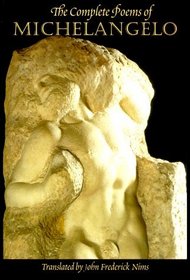
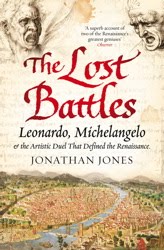
I didn't always enjoy learning about history at school. However, I do love art, and when I learn about history through art, making connections between historical figures or events through art or poetry, it fascinates me. Having read some of Michelangelo's poetry in his book "The Complete Poems of Michelangelo", and also being a great fan of Michelangelo's artistic portrayals of the human body, as well as the detailed attention to fabric by Leonardo da Vinci, I was intrigued to find a book entitled "The Lost Battles" by Jonathan Jones, whilst browsing through the National Gallery shop on a recent trip through London. It details the bitter feuds between the two artists during Renaissance Italy. Interestingly it describes how Raphael, a rival painter to Michelangelo, painted Michaelangelo amongst the characters found in the wall painting entitled: "The School of Athens":
"Raphael wittingly included Michelangelo in his mural, brooding massively, leaning his head on his hand whilst he scribbled poetry on a sheet placed on the stone block beside him. His face is downcast in introspection beneath his unkempt black hair."
And here is the painting. A glimpse into the life of the poet at work! See if you can spot Michelangelo in the painting.

7 March 2011
World Book Night 5th March 2011
 I'd only been to one poetry reading session before, back during Book Day 2009, and that was filled with secondary aged students eating their lunch with crumbs dropping into their laps as they eagerly listened to the next poem to be read. A kind audience. I braved reading one of my own poems at that one too. This time, however, on World Book Night 2011 the audience was comprised of seasoned poetry lovers, cooing with excited appreciation for the next "Betjeman" or "Keats". I discovered "Diary of a Church Mouse" to be rather entertaining when read with the voice with which it was intended. I also discovered that my knowledge of our poetry heritage was dire. (I need to either read up, or learn to nod or coo in the right places.) The local Book Night organiser, whose focus on poetry readings was responsible for enticing me in, via a good friend's invitation, read her selected poems like a stage actress whose pronunciation of vowels were all simply perfect (a history of elocution lessons it transpired). She put her heart and soul into each reading, not thinking for a moment to feel subconcious of the onlooking audience. She read with her whole body emphasising the roll of the poem's rhythm. I looked on in awe wondering if I had the same sounds when I spoke or if my lack of elocution would betray me. I jumped in when the chance came to read my poem with an announcement that I was offering "one of my own". (It's a hard job to follow Keats but someone's got to do it). I stayed safe with the first one "The Peace of 6.a.m. on a Sunday". Then later, once others had the chance to read too, I offered two more to give them some air, (there is no point in writing 479ish poems just to leave them gathering electronic dust on my hard drive): "For She Who Hates Herself Not to Eat" and "The Cycle that Turns", both based on my observations of young people during my time either as a teacher in a secondary girls school or as a volunteer youth worker. I had some good feedback and was encouraged to keep writing. This was a good day in my journey into the sub-world of poetry readings.
 14 June 2009
La Poésie C'est...
For the francophones out there, here are some notes on Poetry that I found in a French text book lying on the staff room table in France during a French exchange. It presents definitions of poetry from the mouths of famous French poets themselves:
La Poésie C’est…
…un pur don céleste (Du Bartas)
…faire une perle d’une larme (Musset)
…donner à voir (Eluard)
…de la musique avant toute chose (Verlaine)
…une grappe d’images (Bachelard)
…l’art d’évoquer les minutes heureuses (Baudelaire)
…une imitation et une peinture (Fénelon)
…comme des lunettes. C’est pour mieux voir… (Siméon)
…tout ce qu’il y a d’intime dans tout (Hugo)
…les mots qui disent le monde et qui disent l’homme (Eluard)
The fact that the definitions are written in French makes them seem to me like poetry themselves. "...to make a pearl from a tear (Musset)" reminds me of the Psalm writers of the bible and how God can change our dark clouds to sunshine if we just stick with him through any trial (see Blog entry 17 January 2009)
La Poésie C’est…
…un pur don céleste (Du Bartas)
…faire une perle d’une larme (Musset)
…donner à voir (Eluard)
…de la musique avant toute chose (Verlaine)
…une grappe d’images (Bachelard)
…l’art d’évoquer les minutes heureuses (Baudelaire)
…une imitation et une peinture (Fénelon)
…comme des lunettes. C’est pour mieux voir… (Siméon)
…tout ce qu’il y a d’intime dans tout (Hugo)
…les mots qui disent le monde et qui disent l’homme (Eluard)
The fact that the definitions are written in French makes them seem to me like poetry themselves. "...to make a pearl from a tear (Musset)" reminds me of the Psalm writers of the bible and how God can change our dark clouds to sunshine if we just stick with him through any trial (see Blog entry 17 January 2009)
Subscribe to:
Posts (Atom)